|
Mr. Naoki Abe URL https://studio-a.sakura.ne.jp/https://x.com/JHvkDG9hEWibZCs |
|
|
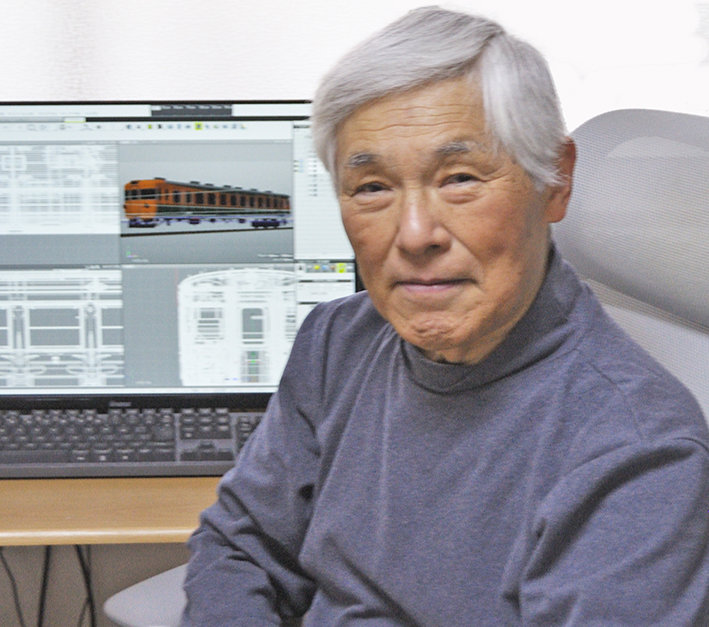
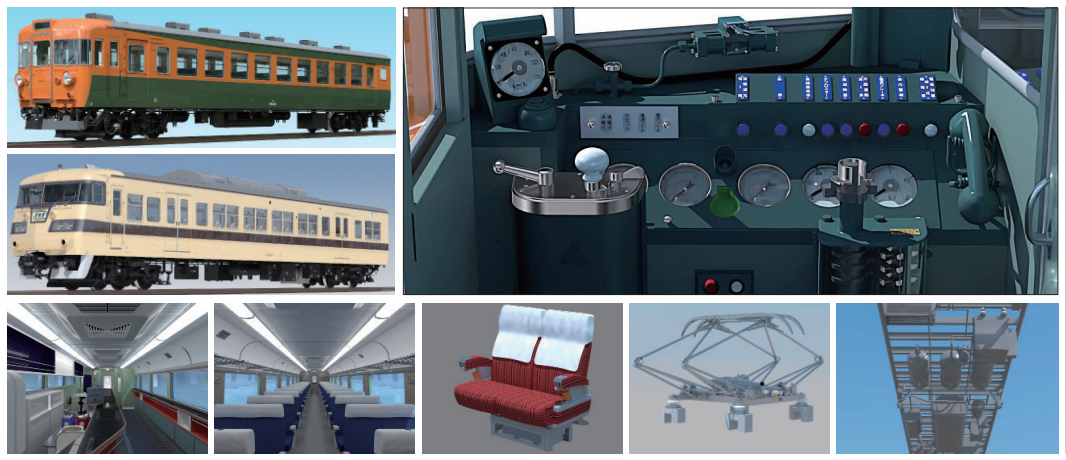
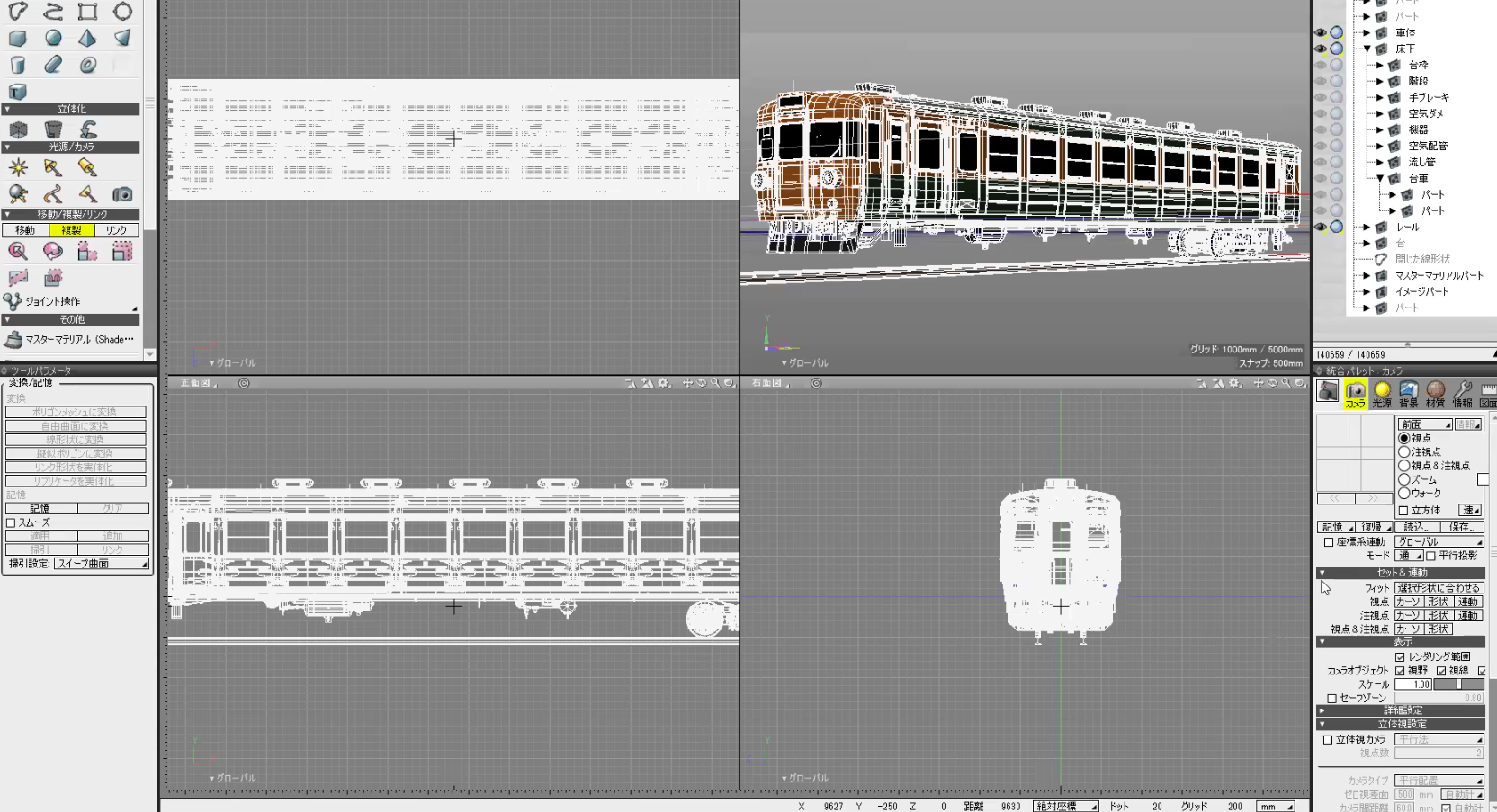
An Encounter with Shade3D, His Longtime Creation Partner Mr. Naoki Abe creates accurate CG train models with Shade3D and publishes them on his social networking sites and website. We were amazed by the high level of detail in his train model data, which is currently under creation. Even the smallest parts are faithfully reproduced in three dimensions. He started to use Shade3D when Windows95 was released. After trying several foreign 3D CG software, he was most attracted to the Shade3D trial version because it was light and easy to operate. Initially, he reproduced various models, including planes and humans. Eventually, he started receiving commissions for architectural perspective drawings, and Shade3D became a useful tool for both hobbies and practical work. After taking a break for several years, he resumed creating train models in 2019 after reading a railway magazine. He newly bought Shade3D Ver.20, which is compatible with the latest OS on his computer and has used it to create realistic models. Express Train Models in Detail with Free-Form Surfaces When Mr. Abe creates train models, he first imports actual train drawings from the internet. Then, he uses the provided dimensional information to accurately model each part. Using free surface, he accurately reproduced detailed parts such as the equipment under the train vehicle, the doors and passenger seats in the passenger vehicle, and the lights. "I rarely use polygons, but rather free surfaces, because they can easily reproduce rounded shapes, such as stools. The swept surface function, which helps create pipe shapes, is also essential for making components like window frame rubber and handrails", said Mr. Abe. Each model is completed by carefully crafting the countless parts that make up a single vehicle over approximately three to four months. Then, they are all assembled together at the end. Creating such a detailed CG model would normally be several gigabytes in size, but Shade3D keeps it under 200 MB, making it easy to handle.
Mr. Abe also commented, "I'm also grateful that rendering functions have evolved recently. Previous 3DCG software usually took 4-5 hours to render, but with the latest version of Shade3D, I can render the interior of a vehicle in under an hour and the exterior in about 10 minutes. The AI noise reduction function in Ver.22 is also very effective, completely eliminating noise for beautiful results". According to him, one of Shade3D's charms is that it runs smoothly on a standard home computer. He uses a line light source for the fluorescent lighting from the Showa era, which has now been replaced by LEDs, to create shadows and interior lighting that look just like the real thing. In addition, he models even the smallest details, such as the mesh on the luggage rack, the needles on the instrument panel, and the lettering on the notice board in the driver's cab, to realistically recreate the tasteful vehicles of the Japan National Railways era. "Creating each part one by one is a mundane task, but it's really fun to watch the model take shape little by little." Shade3D's smooth operability and free modeling environment has supported his creation activities for a long time and is an essential expression tool for him. Mr. Abe will continue to creating 3D models and promoting the appeal of trains to railway enthusiasts.
| ||||||
| (Up&Coming '26 New Year issue) | ||||||
|
|
|||||
|
|||||
|
|||||


